
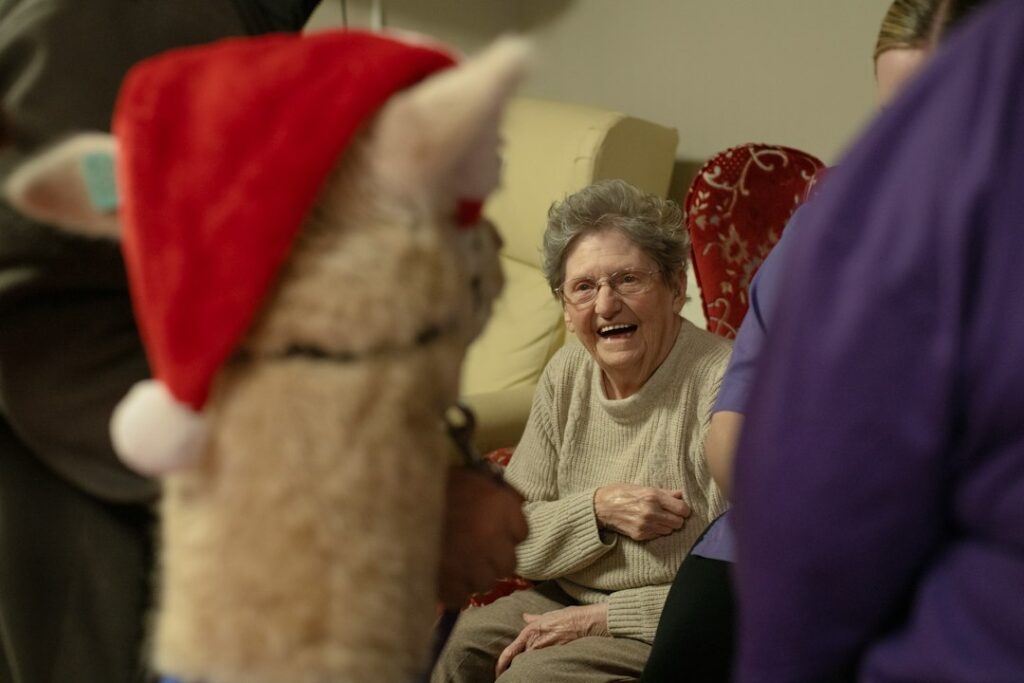
How can residents celebrate holidays in assisted living?
Residents can celebrate holidays in assisted living by combining familiar traditions with activities that match their energy, health needs, preferences, and comfort level. A holiday does not need to look exactly as it did in a private home to feel meaningful.
For many residents, the most enjoyable celebrations include a few recognizable elements: favorite foods, familiar music, seasonal decorations, visits with family, religious observances, storytelling, and time with other residents. The goal is not to create a busy schedule. It is to create opportunities for connection, choice, and pleasant memories.
Assisted living communities often plan holiday meals, craft activities, concerts, worship services, movie gatherings, parties, and visits from family members. Residents and relatives can also add personal touches that make the season feel more individual.
What holiday activities work well for older adults?
The best activities are easy to join, adaptable, and meaningful rather than physically demanding. Residents should be able to participate for a short time or remain involved for a longer period without feeling pressured.
Useful options include:
- Decorating a small tree, wreath, doorway, or tabletop display
- Listening to seasonal music from different decades
- Making simple ornaments, greeting cards, or centerpieces
- Baking or decorating cookies with staff or family members
- Looking through family photo albums and sharing holiday memories
- Watching classic holiday films
- Attending a seasonal concert or sing-along
- Reading holiday stories, poems, or religious passages
- Playing familiar card games, trivia, or word games
- Preparing care packages or handwritten notes for others
- Participating in a community meal or open-house gathering
Activities should be adjusted for vision changes, arthritis, hearing loss, dementia, and limited mobility. Large-print materials, easy-grip tools, clear instructions, and quiet areas can make participation easier.
How can families visit during the holidays?
Family visits are often most successful when they are planned around the resident’s daily routine and stamina. A shorter visit at a comfortable time may be more enjoyable than a long gathering that becomes tiring.
Before visiting, relatives can ask about the community’s guest guidelines, dining arrangements, infection-control procedures, and preferred visiting hours. Holiday periods may bring more visitors than usual, so planning ahead can reduce confusion.
A visit may include:
- Bringing a favorite seasonal snack that fits the resident’s dietary plan
- Looking at photographs or familiar decorations
- Singing songs or playing music at a comfortable volume
- Reading to a resident who has difficulty holding a book
- Taking a supervised walk indoors or outdoors, weather permitting
- Sharing a simple craft or puzzle
- Recording short greetings from relatives who cannot attend
Large family gatherings are not always ideal. Crowded rooms, multiple conversations, unfamiliar guests, and loud music can overwhelm some residents, particularly those living with dementia or hearing impairment. A quiet visit with one or two familiar people may provide more comfort.
How should holiday traditions change for residents with dementia?
Holiday traditions may need to be simplified for residents with dementia, but they should not be removed automatically. Familiar sights, sounds, smells, and routines can provide reassurance when presented in a calm way.
Use clear, simple choices instead of open-ended questions. For example, asking whether a resident would like to listen to music or look at photographs may work better than asking what activity they want to do.
Helpful approaches include:
- Displaying a small number of familiar decorations rather than heavily changing the room
- Using labels or photographs to identify family members
- Keeping the celebration in a familiar location
- Reducing background noise and visual clutter
- Offering one activity at a time
- Allowing the resident to observe without participating
- Avoiding arguments if memories or dates are confused
- Watching for signs of fatigue, anxiety, or overstimulation

A resident may not remember the exact holiday, date, or names of visitors but may still respond positively to music, warmth, conversation, or a familiar dessert. Emotional comfort can matter more than perfect recall.
What should families bring to a holiday celebration?
Families should bring items that are safe, familiar, and easy to use. Personal belongings can make an assisted living apartment feel more like home, but too many items may create clutter or fall hazards.
Appropriate items may include a small decoration, a favorite photograph, a soft blanket, a seasonal greeting card, a familiar music recording, or a labeled clothing accessory. Check before bringing food, since residents may have restrictions related to diabetes, swallowing, allergies, kidney disease, or other health concerns.
Candles, open flames, fragile glass decorations, electrical cords, small loose objects, and strongly scented products may create safety concerns. Battery-operated lights and lightweight decorations are often easier to manage, but they should still be used according to community rules.
For residents in Lebanon, PA, winter weather can affect travel plans, outdoor events, and family visits. Snow, ice, early darkness, and cold temperatures may make indoor celebrations more practical. Families should allow extra travel time and avoid encouraging a resident to go outdoors if walking conditions are unsafe.
How can residents observe religious or cultural holidays?
Residents should be able to maintain religious and cultural practices as much as their health and living arrangements allow. Families can share information about important traditions, foods, prayers, music, clothing, and meaningful dates with the care team.
Some residents may want to attend services, receive visits from clergy or spiritual leaders, light an approved electric candle, observe dietary customs, or participate in familiar prayers. Others may prefer a private observance in their apartment.
Cultural traditions can also be shared through music, stories, recipes, photographs, language, and family customs. Staff members may not know every tradition, so clear explanations can prevent misunderstandings and help the celebration remain respectful.
How can holiday meals be made enjoyable and safe?
Holiday meals should include familiar flavors while following the resident’s care plan. Portion size, texture, sodium, sugar, and swallowing needs may all affect what is appropriate.
Residents may enjoy a traditional dish in a smaller portion or a modified texture. Families can ask whether a preferred food can be included in a meal or served during a visit. Alcohol should not be provided without checking the resident’s medical conditions, medications, and community policies.
The setting also matters. A meal may be more comfortable in a quieter dining area or private room if the main celebration is crowded. Adaptive utensils, easy-to-open containers, and extra time can help residents eat with greater independence.
What if a resident feels sad or isolated during the holidays?
Holiday sadness is common, especially for residents who are grieving, separated from family, adjusting to assisted living, or remembering traditions that are no longer possible. A cheerful party may not feel appropriate for everyone.
Residents should not be pressured to appear happy or participate in every event. Listening, acknowledging difficult feelings, and offering quiet companionship may be more helpful than trying to change the subject.
Watch for ongoing changes such as withdrawal, loss of appetite, disrupted sleep, unusual confusion, or repeated expressions of hopelessness. These concerns should be shared with the resident’s care team so they can be addressed appropriately.
A meaningful holiday may be as simple as a favorite song, a phone call, a familiar meal, a handwritten note, or a peaceful conversation. In assisted living, celebrations work best when residents have choices and the season is adapted to the person rather than expecting every person to follow the same plan.
